
Vacuum waste bag refill
- Compatible with various vacuum systems Compatible with various …
- Secure, anti-contamination sealing Secure, anti-contaminati…
- Effective disposal of liquid waste Effective disposal of li…

 New customer?

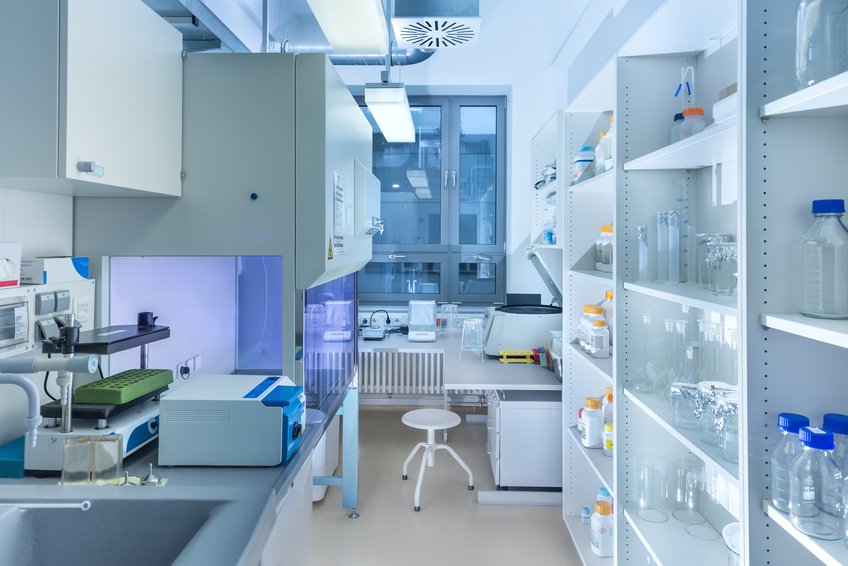
The layout of the reprocessing area Successful infection control is vital in all dentist...
In a dental practice, infection control is an absolute priority. Surfaces, non-immersible medical devices, heat-sensitive instruments, and staff hands must be disinfected thoroughly. With a wide range of products available, how can you be sure you're making the right choice? This guide, based on official recommendations, will help you select the appropriate disinfectants for each use.
Disinfection involves eliminating or inactivating pathogenic microorganisms on a surface or device. The choice of disinfectant depends on three key factors:
Level of infection risk (critical, semi-critical, or non-critical, according to the Spaulding classification)
Type of surface or instrument (reusable instruments, surfaces, hands, etc.)
Compatibility with materials and equipment
Spaulding classification:
Type of item
Risk level
Examples
Required treatment
Critical
High
Surgical instruments
Sterilization
Semi-critical
Moderate
Mirrors, probes, turbines
High-level disinfection / sterilization
Non-critical
Low
Dental chairs, work surfaces
Low- or intermediate-level disinfection
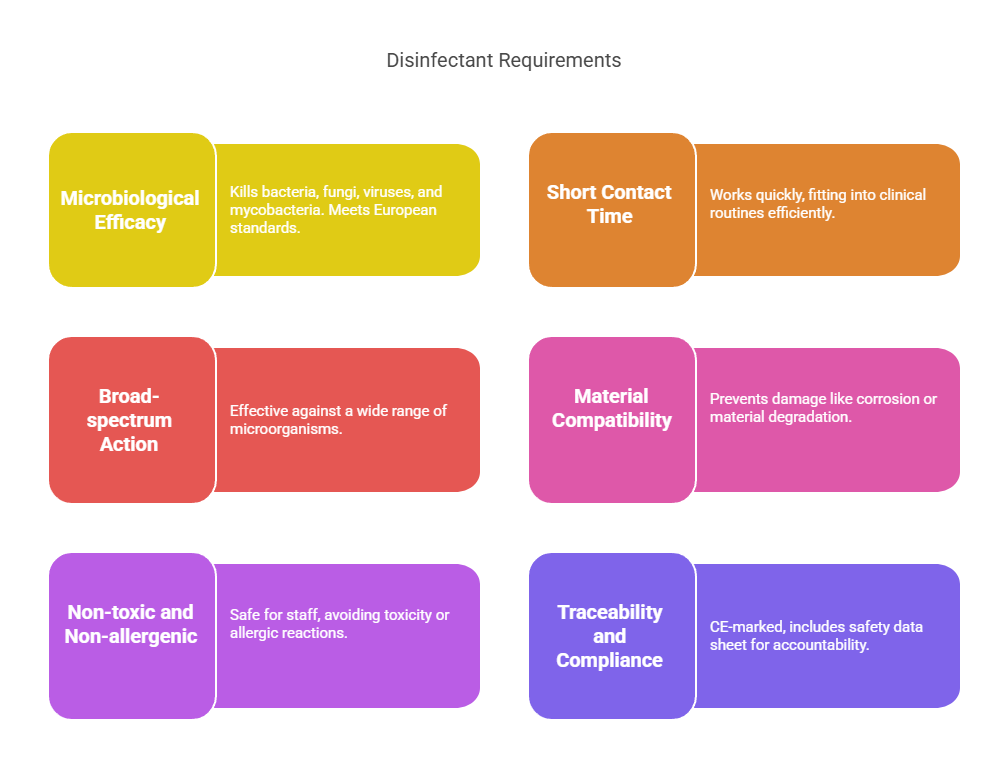
A disinfectant used in a dental environment must meet several regulatory and practical criteria:
Microbiological efficacy: bactericidal, fungicidal, virucidal, mycobactericidal (per EN 1040, EN 1275, EN 14476, etc.)
Short contact time, compatible with clinical workflow
Broad-spectrum action
Material compatibility (to prevent corrosion or degradation)
Non-toxic and non-allergenic for personnel
Traceability and regulatory compliance (CE-marked product with a safety data sheet – SDS)
💡 Tip: Use multi-enzymatic disinfectants for instruments contaminated with organic matter, and alcohol-free formulations for delicate surfaces.
Used for reusable medical devices prior to sterilization. Must be bactericidal, fungicidal, virucidal, and ideally tuberculocidal.
Formulas: glutaraldehyde, hydrogen peroxide, quaternary ammonium compounds
Standards: EN 13727, EN 14561
Used between patients on chairs, worktops, and operating lights. Must act quickly (≤ 5 minutes).
Formulas: isopropyl alcohol, ammonium chlorides, hydrogen peroxide
Standard: EN 13697
Hydroalcoholic solution or gel for hand antisepsis (not simple soap).
Must comply with: EN 1500
Non-foaming products specifically designed to decontaminate suction systems without damaging them. Use biodegradable solutions compatible with your equipment.
Before purchasing, always check:
The listed European standards
Microbiological activity spectrum
Contact time
Conditions of use (temperature, dilution, compatibility)
Expiration date and safety instructions
Establish a validated disinfection protocol in the practice
Train staff in the correct use of each product
Never mix two different disinfectants
Regularly check expiry dates and container condition
Use measuring equipment for concentrated products

 Soaker solution renewal
Bleach
Soaker solution renewal
Bleach