Vacuum waste bag refill
- Compatible with various vacuum systems Compatible with various …
- Secure, anti-contamination sealing Secure, anti-contaminati…
- Effective disposal of liquid waste Effective disposal of li…

 New customer?


The layout of the reprocessing area Successful infection control is vital in all dentist...
Traceability in a dental practice is not merely a best practice; it is a regulatory requirement, particularly for invasive procedures such as implant placement. In France, several legal texts frame this obligation:
The French Public Health Code (CSP, articles R.1112-2 and following) mandates maintaining a patient’s medical file, including the procedures performed, implanted medical devices, and any incidents.
The European Regulation (EU) 2017/745 on medical devices (MDR) introduces the concept of a Unique Device Identification (UDI) system, allowing tracking of a medical device from manufacture to use.
The HAS (French National Authority for Health) highlights, in its recommendations on infection risk management, that traceability is an integral part of healthcare safety.
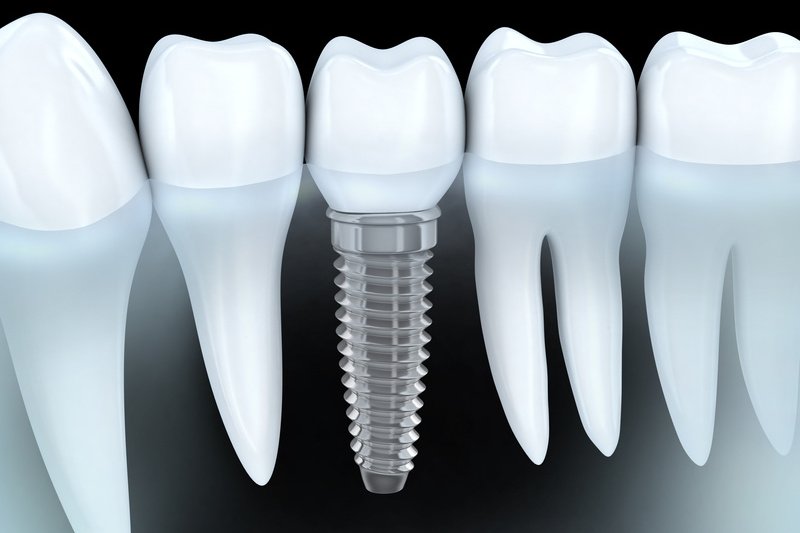
Implantology exposes patients to a high risk of infection due to the invasive nature of the procedures. Traceability allows:
Quick identification of the origin of an incident (implant failure, infection, product recall...),
Ensuring upward and downward traceability (from the patient to the device and vice versa),
Meeting medico-legal requirements in case of disputes,
Proving the sterility of devices used.
It also serves as a cornerstone of infection risk management, ensuring that only compliant and properly sterilized devices are used.
Traceability applies at different levels:
Each implant, cover screw, prosthetic abutment, or membrane must be individually traced. The device label (containing the UDI) must be affixed to the patient’s file.
It is necessary to document:
The sterilization date and cycle,
The identity of the person validating the sterilization,
The integrity of the packaging before use.
Although non-implantable, recording their lot number strengthens safety, especially in case of product recalls.
Any adverse event (autoclave failure, sterilization error, breach of sterility...) must be documented and analyzed.
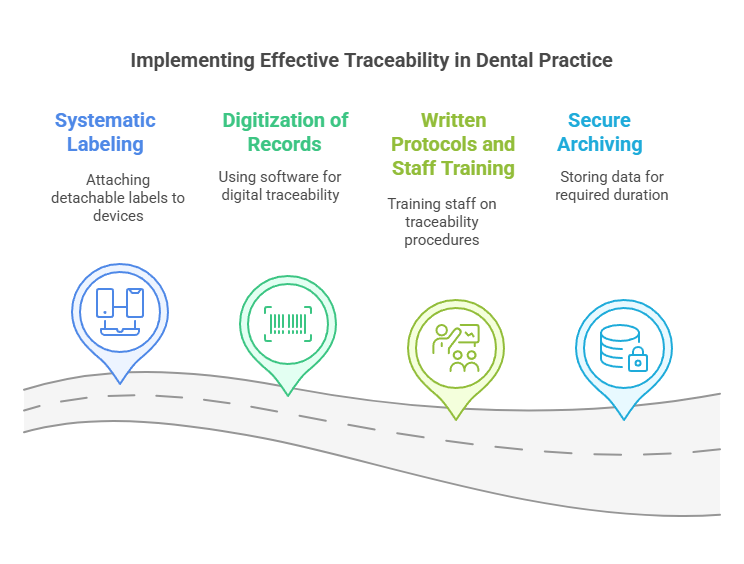
Devices must have detachable labels (usually provided by the manufacturer) that are placed in the patient’s file or a dedicated registry.
Modern practice management software allows digital traceability via UDI barcode scanning, facilitating tracking and future retrieval.
The team must be trained on traceability procedures and the importance of strict compliance. Internal audits can reinforce good practices.
Data must be stored for at least 10 years after implant placement (Article R.1112-2 of the CSP), and sometimes up to 20 years according to some recommendations.
Traceability is central to ensuring quality and safety in implantology. It should not be seen as a constraint but as a safeguard for both the practitioner and the patient. By structuring traceability around clear protocols and adapted tools, the dental practice strengthens both its regulatory compliance and its clinical credibility.